
How to stop checking your partner's phone starts with one honest moment: the hand reaches before the mind agrees. You are not a bad partner for feeling the urge. You are a worried one, and worry can be handled without snooping.
Quick Answer
How to stop checking your partner's phone: name the feeling behind the urge, pause for ten minutes, and replace the check with one honest sentence to your partner. Agree together on what stays private and what stays shared, keep a short trigger note for one week, and let consistent honest days rebuild the trust that snooping can never prove. If the urge keeps escalating into tracking or daily monitoring, bring it to a therapist before it hardens into a habit.
This guide is for the partner who checks, not the partner being checked. It gives you nine calm fixes, scripts, and a phone agreement you can set tonight. You will learn why the urge feels urgent, what checking costs, and how to find certainty honestly.
One boundary matters before you start. This guide is about an urge, not evidence. If you have clear reason to believe you are unsafe, or you found proof of serious betrayal, skip the habit advice and get support first. Safety comes before self-improvement, every time.
Quick Jump
- Why the urge feels so strong
- What snooping actually costs
- Name the real feeling first
- Privacy is not secrecy
- Say it out loud instead
- The 9 calm fixes
- Agree on phone rules together
- When checking becomes a problem
- If you already looked
- Rebuild trust without surveillance
- A 7-day reset plan
- Build a life beyond the worry
- Consent, shared devices, and phone norms
- When the worry is really about you
- Snooping, asking, or agreeing
- Common questions
- Summary

The calmest move is the simplest one: phone face down, hands free, urge noticed but not obeyed.
🔍 How to Stop Checking Your Partner's Phone: Why the Urge Feels So Strong
The urge rarely starts with the phone. It starts with a feeling you cannot name yet. A late reply, a locked screen, or a name you do not know can light it up. Your brain wants certainty, and the phone looks like the fastest source.
Checking gives instant relief, then a longer worry. Relief teaches the brain to check again next time. Soon the habit runs on its own, even on calm days. That loop is why willpower alone rarely works.
Anxiety, jealousy, and boredom often wear the same mask. Each one whispers that one look will settle things. Naming which feeling is active breaks the mask. You can then answer the feeling, not the phone.
Try This
When the urge hits, say the feeling out loud in one sentence. "I feel anxious because he replied late." Naming it takes ten seconds and often halves its power.
The brain treats uncertainty like a threat, so it hunts for information anywhere. A phone offers fast answers, which is why it beats slower comforts like waiting or talking. Speed is not truth, though, and fast answers often mislead.
Stress makes the loop tighter. On tired or lonely days, the same late reply feels far worse than on good days. Learning how to stop checking your partner's phone means learning your tired days too, not just your calm ones.
📱 How to Stop Checking Your Partner's Phone: What Snooping Actually Costs
Learning how to stop checking your partner's phone starts with seeing what snooping costs. Your partner loses privacy, and you lose peace, because one check is never the last. Even an empty result leaves a new fear: maybe you missed something.
Messages without context mislead easily. A joke with a coworker, a surprise plan, or a venting chat can look like betrayal in a screenshot. You react to a fragment as if it were the whole story.
Getting caught adds a second wound to the first. Now the talk is not only about your worry, but about the violation itself. Repair gets twice as hard, and the original worry stays unanswered.
The pattern is not unique to partners. Checking an ex's social media runs on the same promise: one more look will finally settle it, and it rarely does.
🧠 How to Stop Checking Your Partner's Phone: Name the Real Feeling First
Before you reach for the phone, the first step in how to stop checking your partner's phone is one question: what am I actually feeling? Anxiety says something bad might happen. Jealousy says someone else might win. Boredom says nothing is happening at all.
Each feeling needs a different answer. Anxiety needs calming, jealousy needs reassurance from conversation, and boredom needs your own plans. A phone check answers none of them well.
Keep a trigger note for one week. Write the time, the trigger, and the feeling in one line each time. Most people find only two or three triggers repeat. That short list is your real work.

One line per urge, for one week: time, trigger, feeling. The pattern on paper is easier to break than the one in your head.
Three feelings, three honest responses
Anxiety needs a slower body first. Take three slow breaths, step outside, and let the spike pass before you decide anything. A calm body makes a fairer judge than a racing heart.
Jealousy needs one direct question, then full listening. Ask what worried you, hear the whole answer, and resist adding a second accusation. One clean question beats ten secret checks.
Boredom needs a plan of your own before evening. Choose one thing that is yours, a walk, a call, a chapter, and do it first. A full day leaves less room for the urge.
🚫 How to Stop Checking Your Partner's Phone: Privacy Is Not Secrecy
Privacy means room to be a whole person, and it is central to how to stop checking your partner's phone. Secrecy means hiding something that affects you both. Every healthy relationship needs the first and limits the second.
Your partner's phone holds friendships, work chats, family worries, and private thoughts. None of those belong to you by default. Access without asking treats a person like evidence.
Agreeing on privacy is not approving distance. It is saying: I trust you enough to let you have a private life, and I expect the same. That trust is what makes closeness safe.
Watch Out
Do not trade phone access for trust. Shared passwords often feel like safety but act like surveillance. If you need a password to feel calm, the calm needs a conversation, not a code.
When jealousy drives the urge, handling jealousy calmly helps more than any check ever will. Calm handling keeps the conversation open, while snooping closes it.
Privacy also protects the checker, not only the checked. A private life of your own means fewer comparisons, fewer triggers, and less material for worry. Learning how to stop checking your partner's phone gets easier when you guard their privacy too.
💬 How to Stop Checking Your Partner's Phone: Say It Out Loud Instead
In learning how to stop checking your partner's phone, a blunt question does less damage than a discovered check. Awkward honesty keeps respect intact, while secret snooping breaks it. Your partner can answer a fear, but they cannot answer a violation gracefully.
Relationship researcher John Gottman, in The Seven Principles for Making Marriage Work (1999), described the "soft startup": conversations that begin gently are far more likely to end well. That finding, from the Gottman Institute's research, supports opening with warmth, not accusation.
For late-night texting, try this script: "When you text late at night, my mind fills the gap with worry. Can we agree on a quick goodnight text?" It names the trigger, the feeling, and a small request.
For a general worry, try this script: "I have been feeling insecure since Thursday, and I want to talk about it rather than snoop." Honesty about the urge itself often earns more trust than hiding it.
For reassurance without surveillance, try this script: "I do not need your password. I need to hear that we are okay, in your own words." That line draws the boundary and asks for closeness at once.
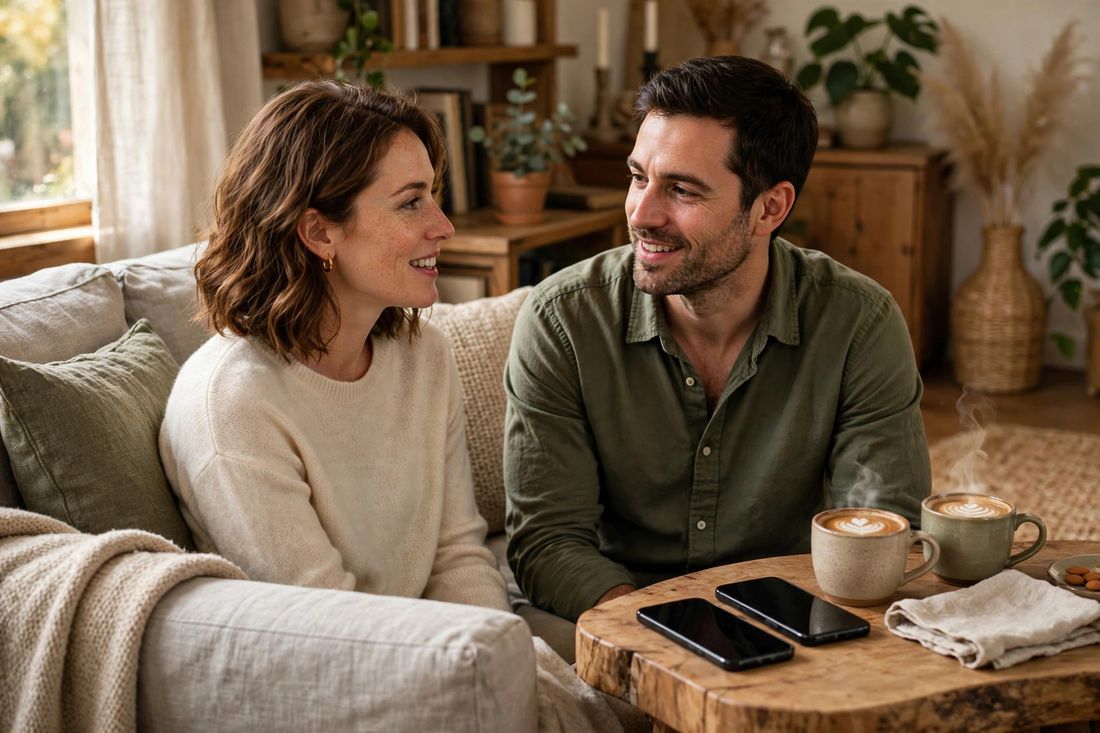
One honest sentence, said out loud, does what ten secret checks cannot: it lets your partner actually answer you.
If distance, not a single text, is the real pattern, learn about emotional unavailability before you blame the phone. A pattern of distance needs a different conversation than a single late reply.
End every hard talk with one kind sentence, even a small one. "Thank you for hearing me" closes the loop warmly. Talks that end warmly are talks you will both repeat.
📝 How to Stop Checking Your Partner's Phone: The 9 Calm Fixes
Nine fixes for how to stop checking your partner's phone, in order of the moment. Use them when the urge arrives, not after you gave in. Each one takes minutes, and together they break the loop.
- Pause ten minutes. Set a timer and do one small thing first. Most urges fade within ten minutes once you stop feeding them.
- Name the feeling in one sentence. Write it or say it: "I feel anxious because..." A named feeling loses half its urgency.
- Put the phone in another room. Distance is the simplest friction. A phone in the next room cannot be checked by accident.
- Text about your day, not your suspicion. Send something kind or ordinary. Connection answers the need that checking only pretends to meet.
- Move your body for five minutes. Walk, stretch, or step outside. A moving body calms a racing mind faster than a screen.
- Ask one direct question. Choose the worry, say it plainly, and listen to the answer. One honest exchange beats a hundred silent checks.
- Keep the trigger note. One line per urge: time, trigger, feeling. Patterns on paper are easier to break than patterns in your head.
- Agree on a check-in, not a check-up. A nightly two-minute talk about your day beats random surveillance. Rhythm replaces suspicion.
- Review the week every Sunday. Count the urges, note the triggers, and celebrate the days you did not check. Progress you can see is progress you keep.
No single fix works alone. The pause buys time, the naming finds the feeling, and the question builds the trust. Use all three together for a week before judging.
🤝 How to Stop Checking Your Partner's Phone: Agree on Phone Rules Together
A private agreement beats a secret rule every time, and it is a step in how to stop checking your partner's phone. Sit down one calm evening and decide what stays shared and private. Write it down in two lines.
Good agreements are small and specific. A goodnight text when plans run late, phones away during dinner, and no checking without asking. Specific beats grand.
Review the agreement monthly, not daily. A monthly check keeps it alive without turning it into surveillance. Change what does not work, keep what does.

Rules you agree together feel like teamwork. Rules you enforce alone feel like surveillance, even with good intentions.
A sample agreement in four lines
- Phones away during meals and the last hour before sleep. The table and the bedroom stay screen-free, so attention stays on each other.
- A quick text when plans change or nights run late. One short message prevents hours of guessing for the partner waiting at home.
- No phone checks without asking, from either side. Asking first keeps privacy mutual, and mutual privacy keeps trust intact.
- A two-minute check-in every night before bed. Two honest minutes about the day replace a whole evening of silent wondering.
When one partner resists the rules
Resistance does not always mean guilt. Some people hear a phone rule as an accusation, even when it is meant as care. Lead with your own need, not their behavior, and keep the first version small.
If your partner will not agree, keep your own side of the plan anyway. You can still pause, name feelings, and ask direct questions without their signature. One person's steadiness often invites the other's, over time.
🛑 How to Stop Checking Your Partner's Phone: When Checking Becomes a Problem
Occasional urges are human, and knowing how to stop checking your partner's phone starts with spotting the problem early. A problem starts when checking becomes the default answer to every worry. Watch for the signs before they harden.
Warning signs include checking despite reassurance, spending long stretches analyzing chats, and moving from a phone to tracking apps or deleted messages. Monitoring friends or family is another line crossed.
When the habit runs your day, bring it to a therapist. A therapist can help you calm the anxiety underneath and build communication that does not need surveillance. Asking for help is not failure; it is the fix.
NOCD therapist Tracie Ibrahim, LMFT, CST, notes that trust rests on clear communication and honesty, and that without them doubt has room to grow. That guidance, from NOCD's therapist advice on phone checking, names the real work: communication, not surveillance.
Watch Out
If checking has become tracking software, deleted-message recovery, or daily monitoring, stop and get support this week. Tools that spy cross a line that habits alone do not.
Therapy is not only for crisis. A few sessions can untangle an old fear faster than months of willpower. Think of it as coaching for the skill this guide teaches: calm, honest communication.
📵 How to Stop Checking Your Partner's Phone: If You Already Looked
Finding nothing rarely feels like victory. Relief lasts minutes, then guilt arrives, then a new suspicion: maybe you looked in the wrong place. That trap is the anxiety talking, not evidence.
You now have a choice: tell them or not. Telling them is harder and healthier.
A simple honest line opens the real talk: "I went through your phone. I found nothing, and I feel terrible about it."
Not telling them avoids one fight but starts a secret of your own. You become the person with something hidden, which is the very dynamic you feared. Secrets rarely stay small.
If you found something worrying while learning how to stop checking your partner's phone, do not confront from the screenshot alone. Write down what you saw, when, and why it worried you. Then talk about the pattern, not just the message.
If you keep checking after promising to stop, say so early, before the next check. A broken promise admitted quickly does less harm than one hidden for weeks. Honesty after a slip is still honesty.
🧭 How to Stop Checking Your Partner's Phone: Rebuild Trust Without Surveillance
Trust is not a decision you make once, and that is why how to stop checking your partner's phone is a practice, not a promise. It is a prediction your brain updates from daily evidence. Consistent honest days count most.
Small promises kept beat grand promises made. A text when promised, a plan kept, a question answered plainly. Each one is a brick, and bricks build faster than speeches.
For couples repairing a deeper breach, rebuilding trust after cheating follows the same principle on a longer road: accountability, empathy, and consistency over time. The road is longer, but the direction is the same: honest days, kept promises, and patience.
Give it a fair timeline. Trust after a scare rarely returns in a week. Judge by the direction over a month, not by one anxious evening.
A 2012 study of 464 people linked Facebook surveillance of a former partner with breakup distress and lower growth. The study was cross-sectional, so it shows an association, not proof of cause. Couples report the same pattern: checking feeds the pain it promises to end.
Consistency also means surviving small ruptures without panic. A missed call, a changed plan, or a quiet evening does not erase weeks of honest days. Trust grows when ordinary days outnumber anxious ones.
Keep a small record of kept promises, if it helps. A note that says "texted when promised, three days running" sounds dull, and dull is the point. Dull, repeated honesty is what a worried brain learns to believe.
If distance has grown between you, reconnecting after emotional withdrawal can help you find each other again before you judge the phone. Closeness returns through shared moments, not through searched messages.
❤️ How to Stop Checking Your Partner's Phone: A 7-Day Reset Plan
Seven days will not cure every worry. They will show you how to stop checking your partner's phone, one day at a time. One step a day, small enough to finish.
- Day 1: Notice every urge without acting. Count them, nothing more, and let the count itself teach you how often the urge visits.
- Day 2: Start the trigger note. One line per urge: time, trigger, feeling, and nothing else to overthink.
- Day 3: Put the phone in another room for one evening hour. Use the hour for something you enjoy, and notice how little you miss.
- Day 4: Say one honest sentence to your partner about a worry. Keep it short, kind, and free of blame, then listen fully.
- Day 5: Agree on two phone rules together, in writing. Two rules are enough to start, and written rules are easier to keep.
- Day 6: Replace one evening check with a walk or a call to a friend. A replacement habit beats a gap, because gaps invite the old urge back.
- Day 7: Review the week. Count the urges, the checks avoided, and one thing that improved since day one.

A shared evening without screens is not a punishment for the urge. It is proof that the relationship is bigger than the worry.
After seven days, keep the two rules that helped most. Drop the rest. A plan you keep beats a plan you admire.
🌱 How to Stop Checking Your Partner's Phone: Build a Life Beyond the Worry
Learning how to stop checking your partner's phone gets easier when your world is bigger than one relationship. When friends, work, and hobbies shrink, every late reply feels huge. A fuller life does not distract from love; it steadies it.
Choose one thing that is only yours this week. A morning walk, a class, or a friend you call every Sunday can refill what worry drains. Your own plans give the urge less empty time to grow.
Notice how the urge to check your partner's phone drops on busy, good days. That pattern is useful information, not a coincidence. It tells you the urge feeds on empty hours, not on real evidence.
This is not about ignoring your partner or building a separate life in secret. It is about meeting them as a whole person, not as a detective. People who feel full at home check less, because they need less proof.
If your world has shrunk to one person, rebuild it gently, one plan at a time. Text one old friend today, and book one small outing for the weekend. Small steps outward make the relationship feel lighter, not smaller.
Try This
Book two things for yourself this week before you review any phone rule. A life you enjoy is the strongest check against the urge.
A partner can feel the difference quickly. You stop asking from emptiness and start sharing from fullness. That shift alone can calm weeks of quiet suspicion.
🔐 How to Stop Checking Your Partner's Phone: Consent, Shared Devices, and Phone Norms
Consent is the line between care and control with a phone. Looking with permission feels different from looking in secret, even when the screen shows the same thing. Ask first, every time, even if you share a home.
Shared devices need their own simple rules. A family tablet, a shared laptop, or a joint streaming account is not an invitation to read messages. Agree on which devices are shared and which stay private.
Passwords deserve the same respect as house keys. Sharing one for convenience, like a streaming login, does not transfer to messages or email. Keep convenience logins and private accounts in separate boxes.
If you already know each other's passwords, talk about what that means now. Agree that knowing a password is not permission to use it. A password you never use builds more trust than one you check.
When in doubt, use the simplest test: would you do it openly, in front of them? If the answer is no, do not do it in secret either. Openness is the whole rule.
Watch Out
Never install tracking apps or read deleted messages to settle a worry. Those tools cross from habit into surveillance, and they damage trust far beyond one argument.
Couples who agree on device norms fight less about phones, which makes how to stop checking your partner's phone a shared project. The talk takes ten minutes, and it prevents months of quiet suspicion. Write the norms down, and review them when life changes.
🪞 How to Stop Checking Your Partner's Phone: When the Worry Is Really About You
Sometimes the phone is not the problem at all. An old betrayal, a past relationship that ended badly, or a childhood of broken promises can leave you braced for the next hurt. The phone just gives the old fear a new target.
Ask yourself one honest question: did I feel this way before this partner? If the answer is yes, the work is older than this relationship. That does not make it less real, but it changes where the fix lives.
Attachment patterns shape how we handle distance. If closeness felt unsafe growing up, a late reply can feel like abandonment. Naming that pattern is not an excuse; it is the first step to loosening it.
Journaling helps how to stop checking your partner's phone more than checking ever will. Write what you feared, what actually happened, and how the two differed. Over weeks, the gap between fear and fact becomes visible.
Self-worth work belongs beside relationship work, not instead of it. A therapist, a trusted friend, or a steady personal practice can all help. You are not fixing yourself because you are broken; you are steadying yourself because you matter.
Tell your partner what you are learning, in small doses. "I notice old fears make me check, and I am working on it" invites patience. A partner who understands the pattern can support it without policing it.
Try This
Each night, write one sentence about a moment you felt secure today. Small proof of safety, collected daily, slowly rewrites the old story.
⚖️ How to Stop Checking Your Partner's Phone: Snooping, Asking, or Agreeing
Three responses to the same worry, three very different costs. The table shows why asking and agreeing beat snooping every time.
| Response | What it gives you | What it costs |
|---|---|---|
| Snooping in secret | A moment of relief | Trust, peace, and a second wound if caught |
| Asking directly | An honest answer | One awkward conversation |
| Agreeing together | Shared rules and calm | One short talk and a monthly review |
Asking costs one awkward talk. Agreeing costs one calm evening. Snooping costs the trust both of them protect.
❓ How to Stop Checking Your Partner's Phone: Common Questions
Is it ever okay to check my partner's phone?
Only with clear mutual agreement or a genuine safety reason, and even then, talk first when you can. Secret checking without permission breaks trust even when you find nothing.
What if I already checked and found nothing?
Expect relief, then guilt, then fresh suspicion, because the urge was never about the phone's contents. Tell your partner honestly and work on the worry underneath, not on better hiding.
How do I tell my partner I checked their phone?
Say it plainly, own it fully, and skip excuses about why you did it. Then ask what repair looks like, and accept that trust returns slowly.
What if my partner hides their phone all the time?
Hiding alone does not prove betrayal, since privacy is normal and healthy. Ask about the pattern calmly, and judge the whole relationship, not one habit.
Can checking ever rebuild trust?
No, checking proves nothing for long, because each clean result only buys a short calm. Trust returns through consistent honest behavior, not through surveillance.
How long does it take to stop the urge?
Most people feel the urge weaken within a few weeks of steady practice. Judge by fewer urges and calmer evenings, not by never feeling worried again.
Should we share passwords to fix this?
Sharing passwords usually feeds surveillance rather than trust, and it rarely calms the urge for long. Agree on check-ins and shared rules instead of shared access.
When should we get professional help?
Seek help if checking turns into tracking, daily monitoring, or fights that never resolve. A therapist can address the anxiety underneath and teach communication that does not need proof.
📌 How to Stop Checking Your Partner's Phone: Summary
Stopping phone checks starts with naming what you feel, not fighting the phone. When worry comes, pause, breathe, and say the feeling out loud. Ask one question instead of searching in secret, and agree on two rules. Small days rebuild trust better than any check.
If you already looked, tell the truth and start fresh. If the urge keeps growing into tracking or daily checks, get help from a therapist soon. You do not need proof to feel safe. You need honest talks, habits, and a partner who answers openly.
Start tonight: notice the next urge, pause ten minutes, and say one honest sentence instead.
Share this guide with someone who checks a phone when worry hits.